Related Articles
A balcony garden should feel like a peaceful retreat, not a collection of flowerpots waiting for the next gust of wind. Unfortunately, exposed balconies can turn breezy weather into a serious problem. Lightweight containers tip, tall plants sway, and loose soil ends up scattered across the floor.
Learning how to keep balcony plant pots from blowing over is about choosing stable containers, arranging them carefully, and securing anything that could fall. You do not need expensive equipment or permanent changes to your rental property. A few thoughtful adjustments can protect your plants while keeping your outdoor space attractive and comfortable.
Why Balcony Plant Pots Fall Over
Wind behaves differently around apartment buildings than it does in a backyard. Air moves around corners, between neighbouring buildings, and over balcony railings. These pathways can create sudden gusts even when the weather seems calm at street level.
Pot shape matters too. A narrow container with a tall plant has a higher centre of gravity than a wide, low planter. Dry potting mix weighs less than moist mix, while large leaves can catch wind like small sails. Together, these factors explain why a pot that seems secure one afternoon might topple overnight.
Before changing your setup, watch where the strongest gusts travel and identify the pots that wobble first. That observation will help you choose the right solution.
Choose Heavy Pots With Wide Bases
The easiest way to improve stability is to use containers that resist tipping. Wide bases distribute weight over a larger area, making it harder for wind to push plants off balance.
Compare Common Pot Materials
Terracotta, ceramic, concrete, and stone planters are generally heavier than thin plastic containers of similar size. That extra weight can help, particularly with compact plants that remain below railing height.
However, heavier is not always better. Balconies have structural load limits, and several large containers filled with wet soil can add substantial weight. Check your building rules and ask the property manager about permitted loads before bringing in oversized planters.
Look for a Practical Shape
Choose squat containers with broad, flat bottoms rather than narrow decorative pots. A planter that widens toward its base usually offers better resistance to tipping. Avoid putting a small pot on a tall pedestal in an exposed corner.
If you love a lightweight decorative container, place a sized nursery pot inside a more stable outer planter. Make sure drainage remains possible and the inner pot does not rock.
Add Weight Without Blocking Drainage
Sometimes replacing every pot is unnecessary. You can make existing containers more stable by adding weight at the bottom or around the base.
A purpose made weighted planter base is useful when you want a removable solution. You can also place a smaller plant pot inside a heavier outer container and fill the space between them with suitable ballast, provided it cannot spill or interfere with drainage.
Avoid filling the drainage layer with random rocks simply to make the pot heavier. Stones at the bottom of potting mix do not improve drainage and can reduce the space available for roots. Instead, keep the growing medium appropriate for the plant and concentrate added weight in an external base or outer planter.
Never use loose bricks or stones where they could roll off a balcony. Every added object should remain contained and secure during strong winds.
Position Pots in Sheltered Areas
Placement can make a surprising difference. A planter tucked beside a solid wall usually experiences less direct wind than one standing at an open railing.
Use Walls and Corners Wisely
Move vulnerable pots toward the building wall, especially when storms are forecast. Corners may provide shelter, although some architectural corners actually funnel gusts. Observe your balcony before deciding which spots are safest.
Keep plants away from doorways, walking routes, and emergency exits. You should also avoid balancing containers on railing tops, no matter how attractive the arrangement looks.
Group Containers Carefully
A collection of pots can form a compact, sheltered arrangement. Put sturdy, lower containers on the outside and place more delicate plants behind them. Leave enough room for airflow and watering so foliage does not remain constantly damp.
Grouping works best when each pot is independently stable. One falling container should not knock over its neighbours like dominoes.
Secure Planters With Suitable Supports
For windy balconies, anchoring may be more reliable than weight alone. The best method depends on the planter, the balcony design, and your building regulations.
Use Approved Planter Holders
Purpose built floor stands and railing planter brackets can hold containers securely when installed according to their instructions. Choose products rated for your specific railing type and the combined weight of soil, water, and plants.
Do not assume a railing box is safe just because its hooks fit. Balcony regulations may prohibit containers attached to outer railings, especially above public walkways. When in doubt, keep planters on the balcony floor.
Try Straps or Contained Supports
Weather resistant straps can sometimes secure a planter to an approved fixed support. They should hold the container firmly without damaging stems, restricting drainage, or creating trip hazards.
Never tie heavy pots to weak furniture, loose screens, or unapproved railing components. If drilling is prohibited, look for freestanding systems with manufacturer tested stability rather than improvising attachments to the building.
Select Plants That Handle Wind Better
The type of plant can affect whether a pot tips. Tall growth and broad leaves increase wind pressure, particularly in shallow containers.
Compact herbs, low flowering plants, and naturally bushy varieties are often easier to manage in exposed locations. Rosemary, thyme, and some compact ornamental grasses may tolerate breezy conditions once established, although their suitability depends on temperature, sunlight, and local climate.
In the USA and Canada, seasonal storms and freezing conditions can create additional challenges. In the UK, persistent coastal wind may be the bigger concern. Choose plants for your specific balcony rather than assuming every wind tolerant species will thrive everywhere.
If a plant becomes top heavy, prune it according to its needs or move it into a wider container. Do not remove so much foliage that you weaken the plant simply to reduce wind resistance.
Install a Safe Wind Screen
A wind screen can make a balcony more comfortable for both plants and people. Options include outdoor privacy mesh, approved screening panels, and suitable balcony barriers.
A partially permeable screen often works better than a completely solid barrier because it allows some air to pass through. Solid screens can redirect wind or experience considerable force themselves, especially on upper floors.
Check your lease, homeowners association rules, or building management policies before installation. Screens must be approved for the location and securely installed so they cannot detach in bad weather. Never block required ventilation, drainage, fire safety equipment, or evacuation routes.
Even with a screen, treat strong wind warnings seriously. No ordinary privacy panel guarantees that pots will stay upright during severe storms.
Keep Soil and Watering Balanced
Soil moisture changes a container’s weight. Dry pots can become lighter and more vulnerable to movement, particularly when planted with large foliage.
Water plants according to their actual needs rather than soaking them just to create ballast. Excess water can cause root problems, overflow onto neighbours, and add unnecessary weight to your balcony.
Use a suitable potting mix, make sure drainage holes remain clear, and empty saucers when standing water becomes a problem. If a container stays unstable despite healthy moisture levels, improve its base or positioning instead of relying on extra water.
Check saucers too. Thin, slippery trays can slide across smooth balcony surfaces. Choose sized, stable trays and place them where gusts cannot lift them.
Use Floor Mats and Stable Shelving
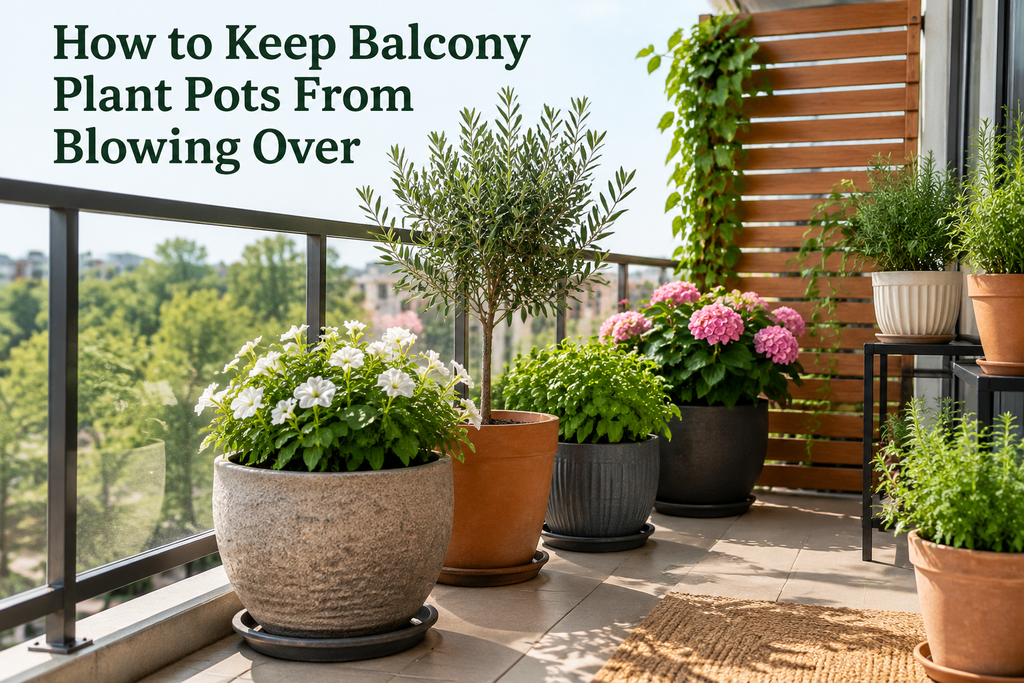
On tiled or smooth balcony floors, some pots slide before they tip. An outdoor mat with a gripping underside may reduce unwanted movement, provided it is suitable for weather exposure and does not trap water against the floor.
For small containers, a low, sturdy plant shelf can keep the arrangement organised. Select shelving designed for outdoor conditions, respect its weight rating, and place the heaviest pots on the lowest level.
Avoid tall, lightweight plant ladders in exposed areas. If shelving needs anchoring, follow the manufacturer’s instructions and obtain building approval where required. A shelf that falls over can be more dangerous than a single loose pot.
Prepare Your Balcony Before a Storm
Windy days and severe weather deserve different responses. When a strong wind alert is issued, the safest option is often to bring movable containers indoors.
Start with hanging baskets, small plastic pots, tall plants, and anything near the railing. Put them in a protected indoor area where water will not damage flooring. If some large planters cannot be moved, use only approved securing methods and follow your building’s emergency guidance.
Remove loose watering cans, empty trays, garden tools, and decorative objects. These items can become hazards when gusts intensify.
After the storm, inspect containers for cracks, loosened supports, exposed roots, and damaged stems. Reposition anything that shifted before normal winds return.
Common Mistakes to Avoid
One frequent mistake is choosing appearance over stability. A tall planter may suit an indoor hallway but perform poorly on a windy balcony.
Another is assuming a heavy pot cannot move. Wind pressure on a large plant can tip even substantial containers, especially when the base is narrow.
People also rely on makeshift ties that weaken in sunlight or rain. Use materials intended for outdoor exposure, inspect them regularly, and replace worn components.
Finally, do not ignore your neighbours below. A falling pot can damage property or seriously injure someone. Keeping every item completely inside the balcony boundary is an essential part of responsible gardening.
Frequently Asked Questions
What is the cheapest way to stop pots tipping over?
Start by moving containers against a sheltered wall and grouping them thoughtfully. Choose wider positions for top heavy plants and remove unstable stands. For additional support, use a secure, appropriately weighted outer planter rather than balancing loose objects beside the pot.
Are plastic pots suitable for windy balconies?
Yes, but lightweight plastic pots need extra attention. Choose broad, low designs and place them in sheltered locations. A stable outer planter can add useful weight without requiring you to replace the inner growing container.
Can I attach flowerpots to my balcony railing?
Only if building rules allow it and the attachment system is designed for your railing and load. Follow the manufacturer’s instructions. Avoid placing any pot where it could fall outside the balcony, especially above pedestrians or parked vehicles.
Should I put rocks inside a flowerpot to weigh it down?
Using rocks beneath potting mix is generally not recommended as a drainage solution. It reduces growing space and may create poor water distribution. A heavier outer container or purpose made base provides a more practical approach to stability.
What should I do with pots during very strong winds?
Bring portable plants indoors before severe weather arrives whenever it is safe to do so. Remove loose accessories and follow official weather advice along with your building’s safety instructions. Do not go outside during dangerous conditions simply to rescue a plant.
Conclusion
Knowing how to keep balcony plant pots from blowing over begins with understanding your particular space. A sheltered ground floor balcony and an exposed apartment balcony several storeys up may require different arrangements.
Choose broad, stable containers, keep plants below risky edges, and use approved supports where necessary. Pay attention to plant height, pot weight, drainage, and changing weather. When severe winds approach, moving containers indoors is often the smartest precaution.
With a little planning, your balcony can remain green, welcoming, and safer throughout the growing season. The goal is not to fight every breeze, but to create a garden that handles ordinary wind confidently while respecting the safety of everyone nearby.