Related Articles
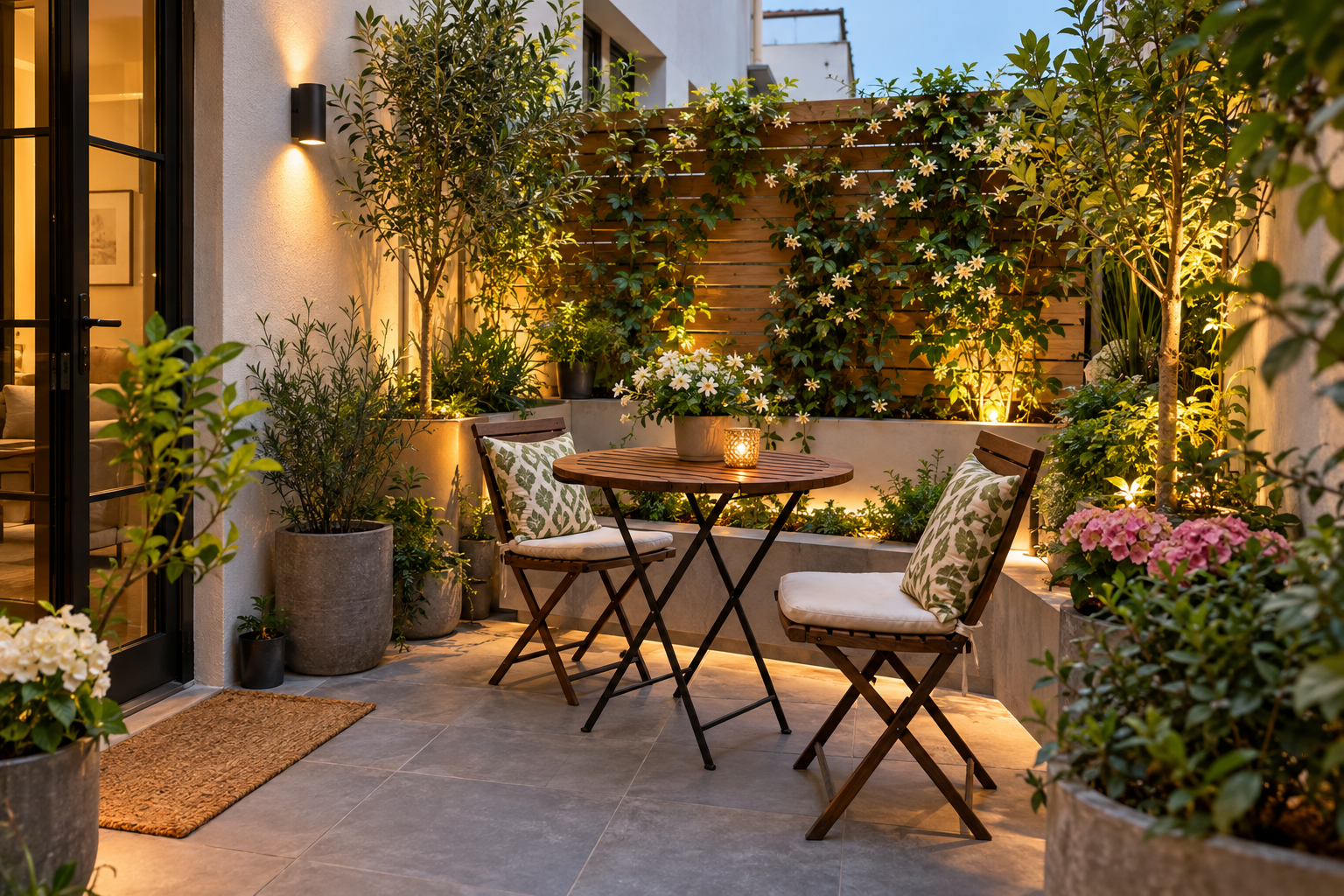
A concrete patio might look like an unlikely place for a flourishing garden. There is no soil beneath your feet, and you may not be allowed to make permanent changes. Fortunately, you can grow vegetables, herbs, flowers, and even small fruit plants without drilling a single hole. With suitable containers, sensible placement, and a simple watering routine, an ordinary paved space can become a welcoming garden.
Whether you rent an apartment in the USA, have a small paved courtyard in the UK, or want to brighten a Canadian townhouse patio, the same basic principles apply. Start with a manageable layout, understand your sunlight, and select plants that suit your climate.
Why a Concrete Patio Can Make a Great Garden
Concrete provides a level, relatively stable surface for movable pots and raised planters. You can rearrange containers as the seasons change, take plants with you when moving, and experiment without altering the property. Container gardening also gives you direct control over soil quality, which can be particularly helpful where nearby ground soil is poor.
However, concrete can become hot in summer and may stay damp beneath large containers. Drainage, weight, and airflow matter.
Step 1: Check Sunlight and Patio Conditions
Observe Sun Exposure
Before buying anything, watch the patio during a normal day. Note where sunlight falls in the morning, afternoon, and evening. Most fruiting vegetables, including tomatoes and peppers, perform best with at least six hours of direct sunshine. Lettuce, parsley, mint, and several leafy greens can manage with less, although growth may be slower.
Nearby buildings, fences, and balconies can cast long shadows.
Consider Wind, Heat, and Access
Wind dries potting mix quickly and can topple tall plants. A sheltered corner is often better for seedlings. Dark containers on exposed concrete may heat up significantly during summer, especially in warmer parts of the USA. Lighter pots, a little afternoon shade, and adequate watering can help.
Make sure doors open fully and that you can move comfortably between pots. Keep exits, shared walkways, drains, and access points clear. If the patio is above ground level, check building rules and weight limits before adding large, soil filled containers.
Step 2: Plan a Simple Layout Without Permanent Fixtures
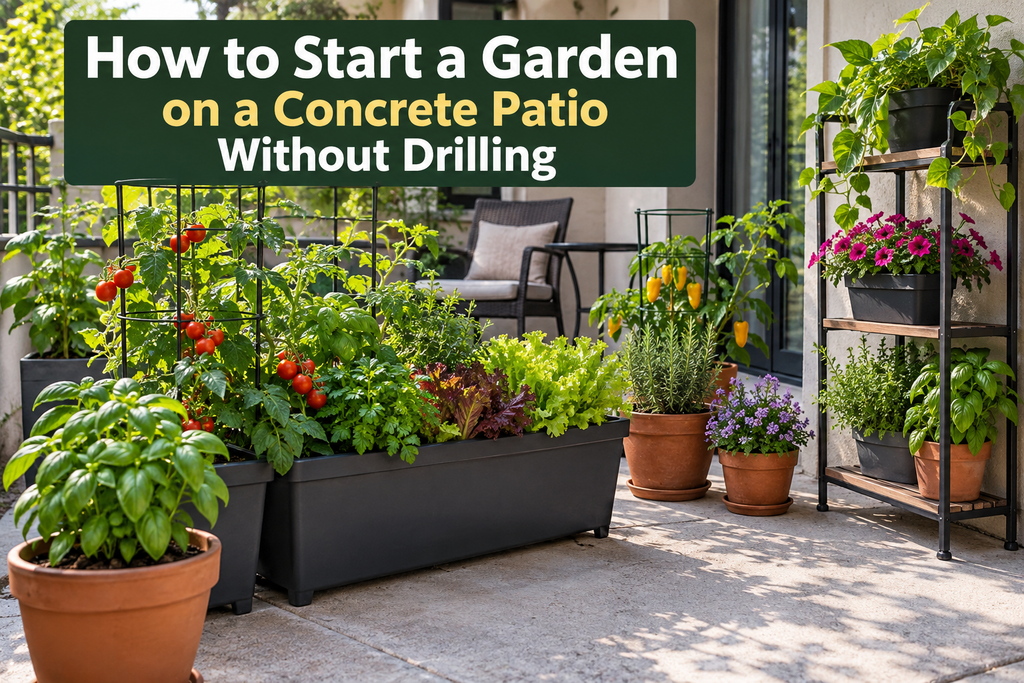
A successful garden does not require covering every square foot. Start with three to five containers arranged where they receive appropriate light. Put taller plants toward the back, shorter herbs near the front, and frequently harvested crops close to the door.
Leave enough space to reach each pot without stepping over another. A narrow patio may benefit from a compact freestanding shelving unit, provided it is designed for outdoor use and remains stable in wind. Avoid loading tall shelves with heavy pots at the top.
Use removable furniture and portable planting stands rather than attaching anything to the concrete or building.
Step 3: Choose Containers That Work on Concrete
Pots and Grow Bags
Plastic, resin, terracotta, fabric grow bags, and lightweight composite planters all have advantages. Plastic and resin hold moisture longer and are easier to move. Terracotta allows air movement but dries faster and can crack during freezing weather. Fabric bags encourage root aeration but may need frequent watering.
For herbs and lettuce, modest pots can work well. Tomatoes, cucumbers, and other larger crops need deeper containers with sufficient room for their roots. Always follow the plant variety’s recommended container size rather than assuming every vegetable fits the same pot.
Raised Planters With Legs
Freestanding elevated planters are useful when bending is difficult or when you want comfortable harvesting height. Choose sturdy models with drainage openings and legs that distribute weight evenly.
Protect the Surface
Set containers on pot feet, sturdy risers, or plant stands that allow water to escape and air to circulate. Trays can catch excess water where required by building rules, but empty them after watering so roots do not sit in stagnant water. Check beneath pots periodically for staining or trapped moisture.
Step 4: Use the Right Potting Mix
Do not fill patio containers with ordinary garden soil. It can compact, drain poorly, and become unusually heavy. Instead, select a quality potting mix labeled for containers. Many mixes contain materials that help maintain a balance of moisture and air around roots.
For vegetables, choose a mix suitable for edible crops. Fill the container while leaving a small gap below the rim to make watering easier.
A drainage hole is essential for most outdoor plants. Since your goal is gardening without drilling, purchase containers that already have holes rather than attempting to modify sealed decorative pots. You can place a nursery pot inside an attractive outer planter and remove it for watering.
Step 5: Pick Beginner Friendly Plants
Easy Vegetables
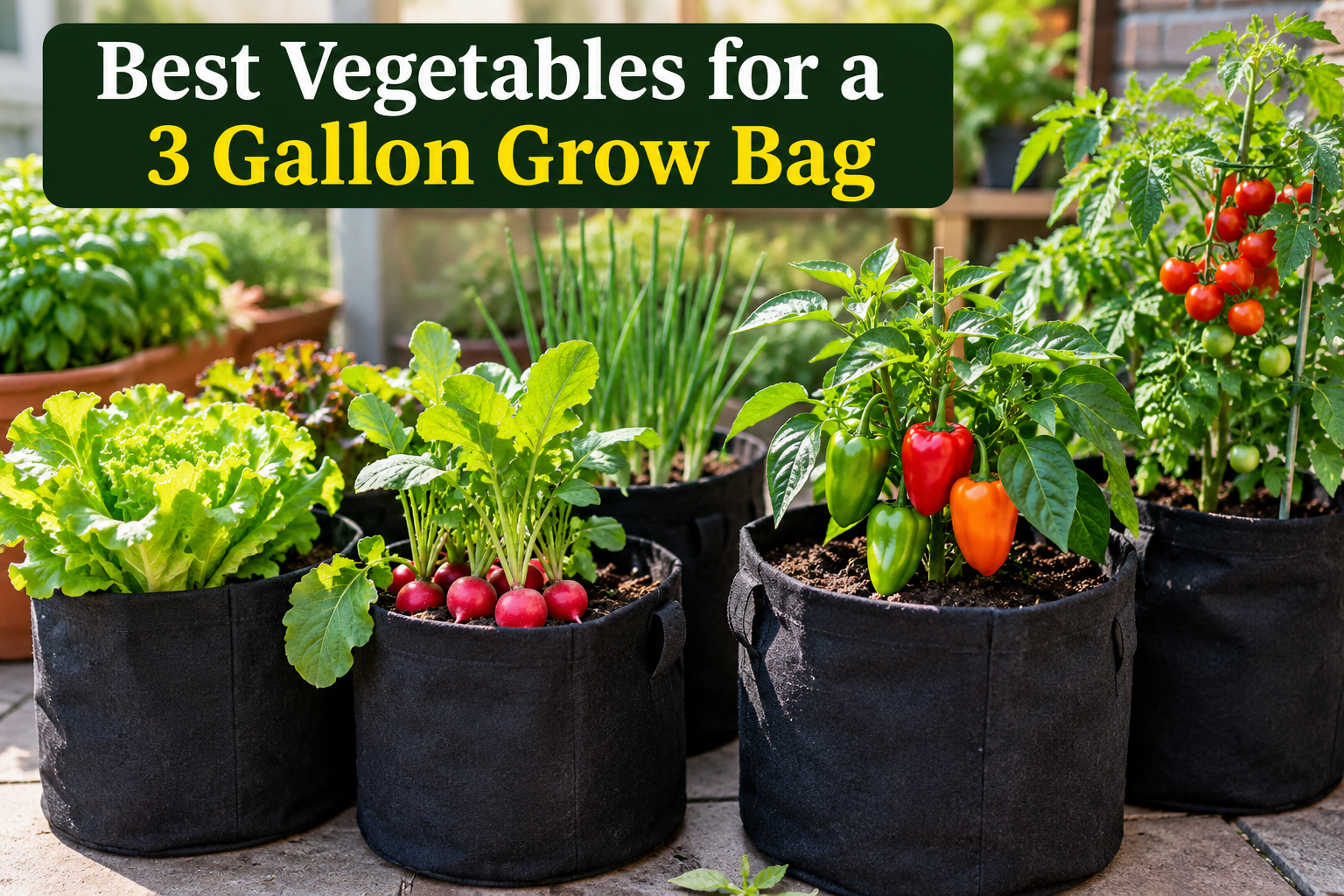
Loose leaf lettuce, radishes, spring onions, compact bush beans, and dwarf tomatoes are popular choices. Lettuce and radishes can provide relatively quick harvests, while dwarf tomatoes need more sunlight and regular feeding. Select varieties described as suitable for containers.
If you have only a few hours of sunshine, concentrate on leafy crops instead of expecting abundant tomatoes. Matching plants to the conditions is more rewarding than fighting against the patio’s limitations.
Useful Kitchen Herbs
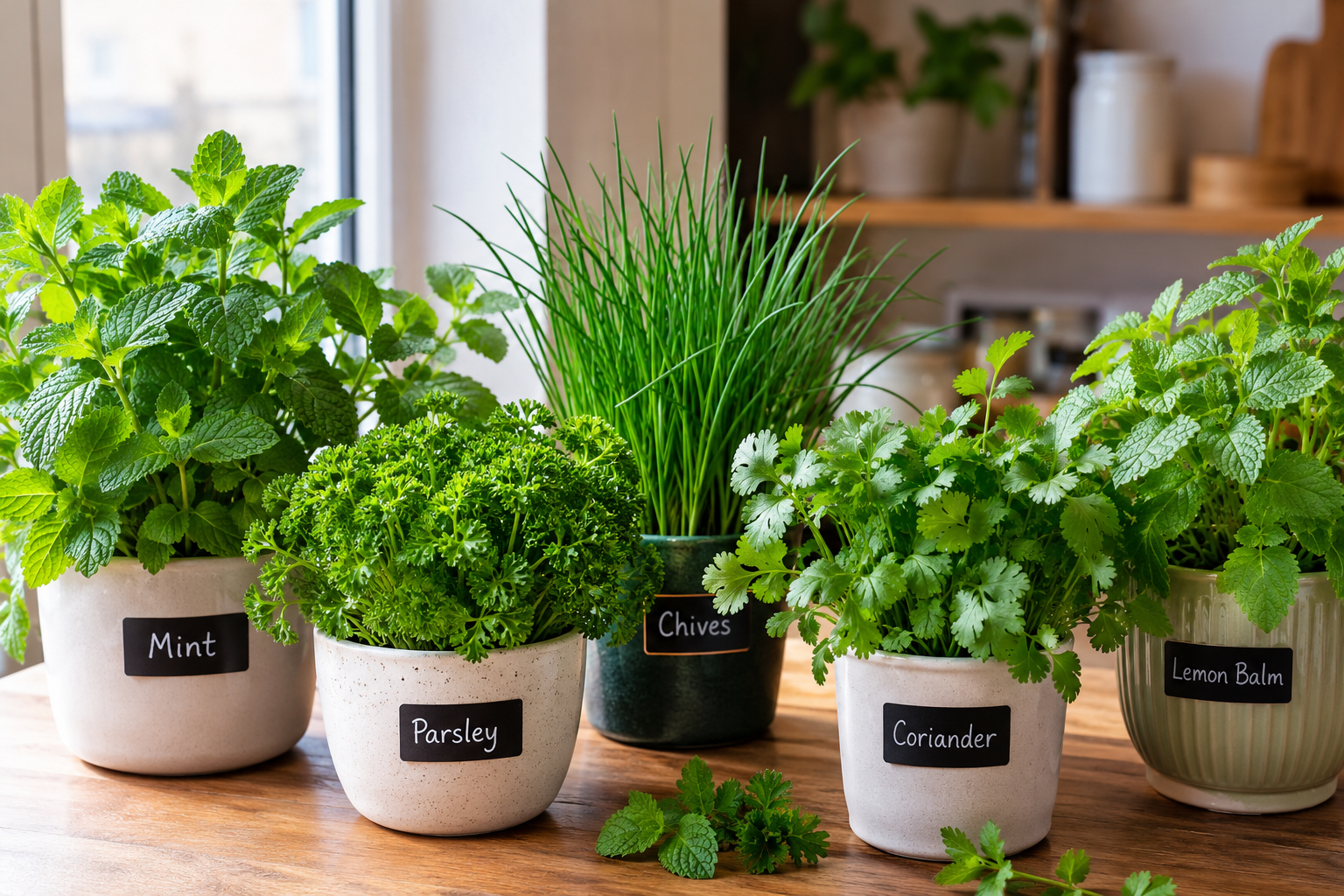
Chives, parsley, basil, thyme, and mint can give your patio immediate purpose. Basil prefers warmth and should be protected from cold nights. Parsley and chives tolerate cooler conditions better. Mint grows vigorously, so keeping it in its own container makes maintenance easier.
Mediterranean herbs like thyme often prefer drier conditions than leafy herbs such as parsley.
Flowers for Color and Pollinators
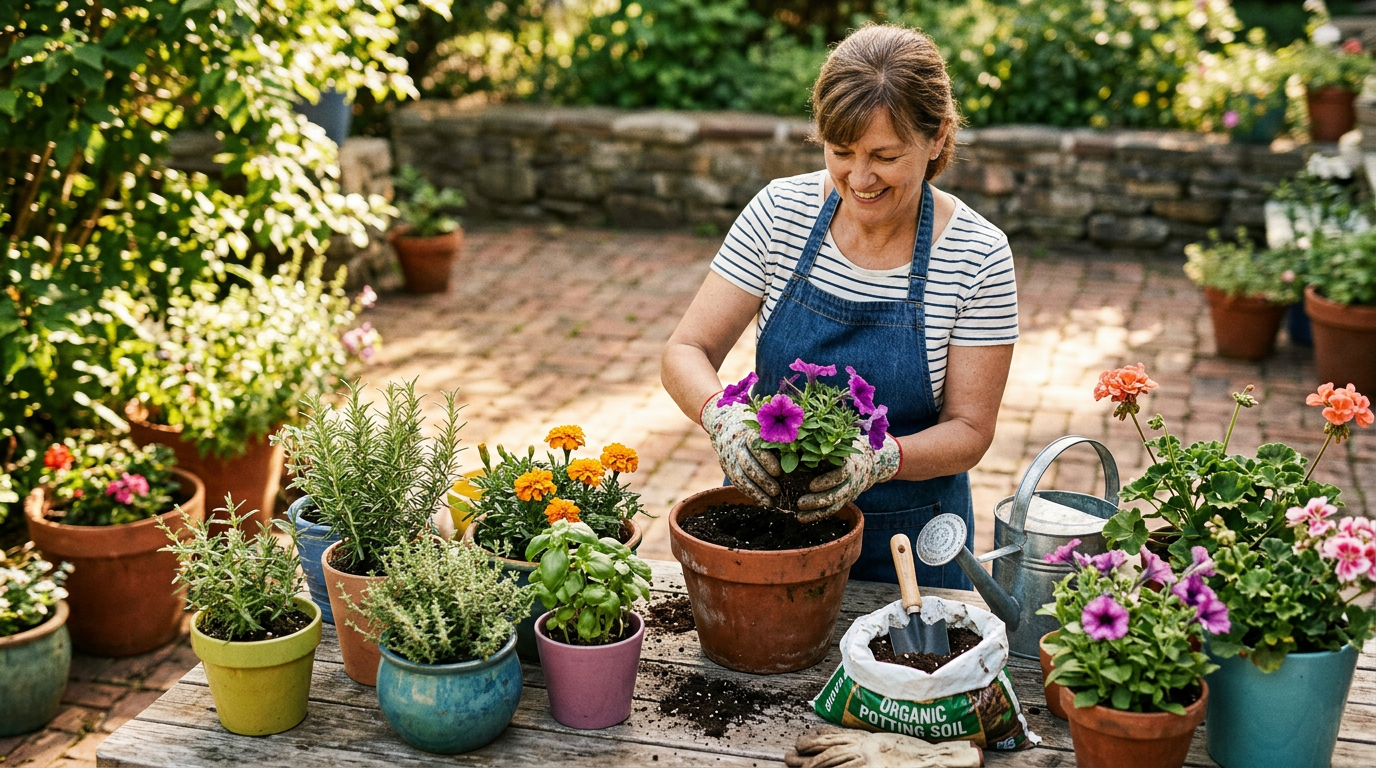
Marigolds, nasturtiums, petunias, and compact calendula varieties add color without needing garden beds. Some offer nectar for visiting insects. Choose flowers suited to your growing season and follow local guidance about planting species that may spread aggressively.
Step 6: Set Up Safe Support Without Drilling
Climbing beans, compact cucumbers, and some tomatoes need support. Place a small trellis directly into a sufficiently large planter, or choose a freestanding support designed for containers. Make sure the base is secure and the overall arrangement cannot fall during strong wind.
Heavy pots at the base may improve stability, but do not use improvised supports that could topple onto people, pets, or neighboring property. For exposed patios, bush varieties may be safer and easier than tall climbing plants.
Avoid fastening trellises to railings unless your building expressly permits it. Railings often have safety requirements, and hanging weight over an edge can create risks.
Step 7: Create an Easy Watering Routine
Plants in containers depend on you for moisture because their roots cannot explore the surrounding ground. Check the potting mix by touching the upper inch with your finger. If it feels dry, water thoroughly until excess drains from the bottom. If it remains moist, check again later.
Hot weather, windy afternoons, and small pots increase watering needs. Cooler or rainy periods may reduce them. There is no universal schedule that works for every patio, so use soil moisture rather than the calendar as your main guide.
A watering can is enough for a small garden. Where permitted, a portable watering system with a removable connection can save effort. Avoid leaving hoses across walkways, and never allow runoff to create slippery surfaces or disturb neighbors below.
Step 8: Feed Plants and Maintain Healthy Growth
Potting mix does not supply nutrients forever. Many vegetables benefit from a fertilizer suitable for container crops, applied according to the package instructions. More fertilizer is not necessarily better; excessive feeding can harm roots and pollute runoff.
Remove yellow or damaged leaves, harvest herbs regularly, and inspect leaf undersides for insects. Hand removal, a gentle rinse, and appropriate locally approved treatments are often sufficient for small problems. Identify the pest before using any product, especially near edible plants.
Rotate pots occasionally for balanced growth when sunlight arrives mainly from one direction. Check plant ties and supports after windy weather.
Step 9: Adapt to Your Local Climate
Gardening in the USA
Conditions vary greatly across American regions. A patio in Arizona may require afternoon shade and close attention to heat, while a patio in the Pacific Northwest may need crops that tolerate cooler, cloudier weather. Consult your local cooperative extension service for suitable planting dates and varieties.
Gardening in the UK
Frequent rain does not eliminate the need for drainage. Protect young plants from cold snaps, and choose varieties that perform well during shorter, milder growing seasons. A sheltered south facing patio can offer useful warmth, but wind protection remains important.
Gardening in Canada
Late spring frosts and early autumn chills can shorten the outdoor season. Start tender plants indoors when recommended, then gradually acclimate them before moving them outside. Use movable pots to bring sensitive herbs indoors during cold weather. Check your local frost dates rather than relying on national averages.
Common Mistakes to Avoid
Overcrowding is a common mistake. Several crowded seedlings may look impressive initially, but roots and leaves soon compete for water, light, and nutrients. Give each plant the spacing suggested on its label.
Another problem is choosing decorative pots without drainage. Waterlogged roots may decline even when the plant appears to need more moisture. Inspect the soil before adding water.
Finally, avoid placing unprotected heavy containers directly on areas where water collects. Move pots when cleaning and watch for algae, which can make concrete slippery. A tidy garden should remain safe and easy to access.
Budget Friendly Ideas for a Small Patio
You can begin with reused nursery pots that have intact drainage holes, a bag of potting mix, and a few seeds or starter plants. Clean reused containers before planting. Instead of buying elaborate furniture, arrange pots at different heights using sturdy outdoor stands.
Grow ingredients you actually use. A single container of parsley or cut and come again lettuce can be more satisfying than several ornamental plants you struggle to maintain. Expand only after you understand the watering and sunlight requirements of your first crops.
Frequently Asked Questions
Can I grow vegetables directly on a concrete patio?
Yes, but vegetables should grow in containers filled with suitable potting mix, not directly on bare concrete. Pick pots with drainage and enough depth for the crop. Elevating pots slightly also helps manage runoff.
How do I keep planters from damaging concrete?
Use pot feet or stands to improve airflow, manage water carefully, and move containers occasionally. Clean spills promptly. Surface treatments vary, so check the manufacturer’s recommendations before using protective pads or cleaning products.
Can I make a vertical garden without drilling?
Yes. Freestanding tiered stands and sturdy outdoor shelves can hold lightweight pots. Keep heavier containers low, avoid blocking exits, and ensure the structure cannot tip in strong winds.
What if my patio gets very little sunlight?
Try parsley, chives, leafy lettuce, and other crops suited to partial shade. Expect slower growth where light is limited. If the space receives almost no natural light, consider a permitted indoor growing setup instead.
Is patio gardening possible in winter?
It depends on your climate and crop. Hardy greens may survive mild winters with appropriate protection, but containers freeze faster than garden beds. In colder Canadian and northern American locations, many gardeners pause outdoor production or move selected plants indoors.
Conclusion
Learning how to start a garden on a concrete patio without drilling is mostly about making thoughtful, flexible choices. Observe the light, select stable containers with drainage, use quality potting mix, and begin with plants that fit your climate and daily routine.
You do not need a major makeover to enjoy homegrown herbs, fresh greens, or bright flowers. Start with a few pots, see how they respond, and make improvements over time. Small improvements often make the biggest practical difference. Your concrete patio can become a productive, pleasant outdoor space while remaining easy to maintain and completely free from permanent alterations.