Related Articles
Everyone has a closet that drives them nuts. There are shoes piled on the floor, clothes crammed on the rod and a mysterious collection of boxes and bags on the top shelf. Getting dressed in the morning is no longer a snap decision. It’s a scavenger hunt. A lot of people think you need to move into a larger house or purchase a custom closet system, but you don’t have to. Most closets, regardless of size, can be improved with a little honest organizing, some reasonably priced equipment, and some organizing habits.
This manual is for the beginner who wants useful instructions that are easy to follow. You will learn how to assess your closet, de-clutter without guilt, plan a better layout, utilize vertical and hidden space, organize clothes, accessories and shoes, improve lighting, and maintain your results over time. No special knowledge or big budget is required. It just requires a bit of perseverance and a willingness to make some choices.
First, be thankful for what you have.
Before you go shopping, think about your closet and how you use it. Stand in front of it and ask yourself some basic questions. What are you working for everyday? What are you struggling to find? What things appear to be in the way? Is it the sheer amount of stuff inside that is overwhelming you or is it the way it is arranged that is the more problematic thing?
Take accurate measurements of the area. Measure the width, depth and height of the closet and the length of the hanging rod, the height off the floor and depth of any shelving. Write those numbers down and let them drive every purchase you make.” It is surprisingly common to buy organizers that do not actually fit, wasting money and causing frustration.
Consider the type of closet you have as well. A walk-in closet can feature dressers, seats and mirrors. A reach-in closet is a narrow closet that provides hanging and stacking options. When a closet is shared by several people, you need a system that gives each person a fair and clear space. Knowing the type of closet you have helps you find solutions that actually work for your space.
Wipe Out All
The most important step in improving a closet is also the most difficult one. Get rid of all of it. Place shoes on the floor, lay out clothing on the bed, and set bags and accessories on a table. Having the whole collection in one place helps you see what you have, and often reveals duplicate items, products you forgot about, and items that don’t belong.
When the closet is empty, give it a thorough cleaning. Sweep the floor, wipe the shelves, clean the rod, wash the walls if necessary. Check for signs of moisture, pests, or odor and correct any problems before reassembling. It feels more rewarding when the process is complete and the closet is clean and clear. It is a fresh start.
It is also the best time to make minor repairs. Tighten loose brackets, patch holes, touch up paint, and fix wobbly shelves. A new coat of light paint can make a closet look larger and brighter for relatively little money.
Ask Genuine Questions to Declutter
Clothes are good intentions and memories, and that’s why decluttering can be hard for beginners. The trick is to ask straight questions instead of going by feelings. Ask yourself if you wore each item in the past year, if it fits you well today, if it is in good condition, and if wearing it makes you feel good. If the answer to most of these questions is no, the item probably doesn’t deserve space.
Sort your items into four piles: throw away, sell, give away and keep. Give a friend or a local charity some good-quality clothes. Take them to a consignment store or sell them through an app. Items that are torn, soiled or beyond repair should be recycled or thrown away.
There are people who prefer to use a trial procedure for products that are not clear. Put them in a box. Seal it up. Write the date six months from now on it. If you don’t open the box in that time, you can donate it without seeing inside. You can store seasonal items like heavy coats and swimwear separately so the room doesn’t get packed at the wrong time of year.
Be gentle with yourself throughout this process. That doesn’t mean you have to be a minimalist or toss everything out. The idea is to keep the things you use and love so your closet is a reflection of your real life, not an outdated version of it.
Plan your layout before you start putting things back.
Once you know what you’re keeping, consider how to display it. Sort products by category Dresses, shoes, shirts, jeans and jackets. Sort by type, length or color in each category. Many people find it easier to see what they have and quickly assemble outfits when they coordinate their clothes by color.
Just think about how much you use it. Common objects should be easy to reach or eye level. You can put items you don’t wear often on the top or bottom shelves. Off-season and special occasion apparel may be stored in the hardest to access locations. When things are put in their proper zones, the closet doesn’t get cluttered again and time is saved.
Decide what to hang and what to fold. You’ll usually want to fold knits and sweaters, as hanging them can stretch the material, but shirts, blouses, skirts and jackets are good on hangers. You can hang or fold t-shirts and other casualwear depending on your space. Jeans can be worn anyhow. Choose the method that matches your lifestyle and closet space.
Use Coordinated Hangers
One of the easiest and most efficient changes you can make is to switch to matching hangers. A jumbled look results from a mix of wire, plastic and wooden hangers taking up uneven space. A set of uniform thin hangers gives the closet a neat and calm look, as well as saves space and prevents clothes from slipping off.
Slim velvet hangers are a favorite for their small size and ability to keep clothes from slipping. Padded hangers protect delicate items and wooden hangers are great for heavy coats and suits. Most clothes shouldn’t be hung on wire hangers because they can get bent and scratched.
Arrange the items by color and category and consistently orient them. This little trick helps you quickly find what you need and gives your closet a tidy look. A cascade hanger or multi-piece hook can double the hanging space in a small closet, but be careful not to create wrinkles.
Include a Second Pole
If you have one rod in your closet with lots of room underneath it for shorter clothes, adding a second rod can almost quadruple your hanging space. Shirts, skirts and folded pants can be stacked on top of each other as they only take up about half the height of a full rod. There are adjustable hanging rods sold in home stores that even a beginner can easily install.
Find the height for all parts. Shirts and pants that are folded require from thirty-six to forty inches of room, and long dresses and coats need from sixty to seventy inches. Set the lower rod about 40 inches off the floor and the top rod about 80 inches off the floor, adjusting for your clothes. If a permanent rod cannot be installed, a tension rod or hanging double rod attachment is a short-term fix.
Use Shelves and Baskets Wisely
Shelves can be used to store bags, accessories and folded clothes. Having just one shelf in your closet? Adding a few extra can open up useful space. Adjustable shelving options allow you to change the height depending on the requirements. Freestanding cabinets and stackable shelves are perfect for renters or anyone who doesn’t want to drill into walls.
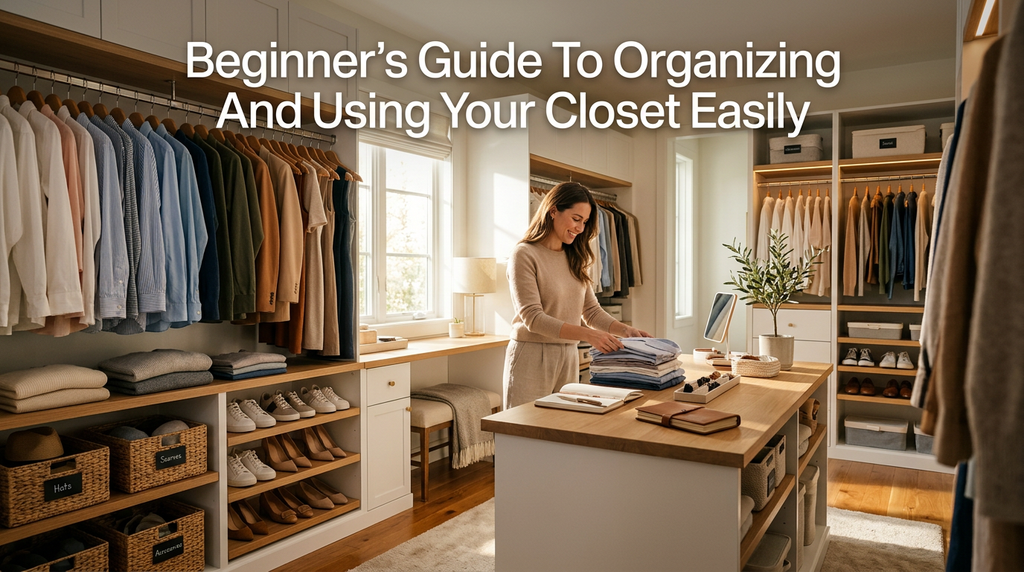
Small items are stored in baskets and containers. They can be made into hats, scarves, belts, gloves, socks and underwear. Label your baskets similar in size and style so everyone knows what goes where. Clear containers make it easier to handle high shelves because you don’t have to take them down to see what’s inside. Fabric baskets are kind to delicate items and have a softer appearance.
Fold clothes to save space and be able to see them. Folding method File folding means you fold things into little rectangles and keep them upright like files in a drawer. This way you can see everything at one time and stop digging. Don’t make the stacks too tall, because then it’s hard to get to the bottom things and they get wrinkly.
Choose Your Shoes Wisely
Shoes contribute a lot to the clutter in your closet. They get hard to find, and if you leave them in a pile, they go bad. You can get your shoes in order quickly with tiered shelves, a shoe rack on the floor, or a shoe organizer hanging on the back of the door. Over the door organizers are a great way to use wasted space and are perfect for flats, sandals and kids shoes.
Place your most worn shoes on the bottom shelf or front. Store shoes for special occasions or off-season in clear boxes on a high shelf. Clean shoes before storage . You can prop up leather shoes with paper or shoe trees to help them hold their shape. If space is tight, keep your collection to pairs you actually wear and love.
Make use of Walls and Doors
Any spare wall space you have, or the inside of a closet door, can be used to store things. You can use hooks to attach bags, robes and scarves and belts. A hanging organizer with pockets is great for accessories, small items, or folded pieces. You can check out your outfit in a slim mirror attached to the door so you don’t need extra room on the floor.
If there’s no shelf on your closet wall, install a wall-mounted rack or a line of hooks. These are good for hats, purses or outfits you plan to wear the next day. Even a small pegboard can offer a tidy and prominent spot to keep jewelry, ties and other accessories.
Proper Storage of Accessories
Accessories are often an afterthought, but a few simple tools can make a world of difference. Jewelry can be stored in a small box on a shelf, a split tray or a hanging organizer to prevent pieces from tangling. Special hooks or racks can be bought to hang up ties and belts. You can hang scarves on a hook with a few loops or fold them into a basket.
“Store handbags upright on a shelf or hang them from hooks so they don’t lose their shape. Stuff them lightly with tissue or a small pillow to avoid creases. Heavy bags can be crushed when stacked on top of each other. Hats should be hung on wall hooks or placed on a shelf, not left in places where they might get bent.
Improve the lighting
Most closets are dark and it’s hard to see the colors and match your clothes or even find stuff. The experience of getting dressed can be completely changed by improved illumination. LED lights that run on batteries, stick-on strips, or tiny motion sensor lights are inexpensive and don’t require wiring. To brighten every nook and cranny, arrange them beneath shelves or along the top of the wardrobe.
Select a bright, neutral white lightbulb that displays real colors if you can replace the current one. Additionally, before you wear something, good illumination makes it easier to spot stains, loose threads, and other issues. “A brighter closet makes the daily routine less stressful, feels bigger and cozier.
Protect your clothing
Your belongings are also safeguarded by a neat closet. Avoid overpacking, which restricts ventilation and promotes musty odors, to keep the air fresh and dry. Compared to conventional mothballs, cedar blocks or lavender sachets are kinder and can help repel moths while maintaining a nice aroma. For unique goods like suits and formal dresses, use breathable garment bags; for long-term storage, stay away from plastic coverings since they might retain moisture.
Think about installing a moisture absorber or a tiny dehumidifier if your closet is located in a damp region. Before storing clothing for the season, wash or dry clean it because body oils and stains can accumulate over time and draw pests. In order to store bulky winter goods when mild weather arrives and vise versa, rotate seasonal products.
Develop Organizing Habits
To keep a lovely closet lovely requires a few basic behaviors. Once you’ve used something, put it back where it belongs. To prevent items from ending up on the floor or back on the rod, keep a small hamper or bag in the closet for things that need to be washed or repaired. 2. Follow the “one in, one out” rule. If you purchase a new item, give away or discard a similar item.
At the end of each season, spend a few minutes going through your wardrobe. Get rid of anything that’s worn out or no longer fits or fits your style. Wipe down the shelves, inspect for pests and make any system adjustments necessary. Mini, frequent check-ins keep the closet from becoming overwhelming again.
Common Mistakes Newbies Should Avoid
There are many mistakes that keep recurring. The most common thing is to buy organizers before you declutter. This is a waste of money and you get a closet full of unorganized organizers. If you skip dimensions, things won’t fit. You keep clothes that don’t fit in the hope that you’ll wear them later, and the things you actually use get pushed aside. When the rod is overpacked, clothes are wrinkled and hard to see.
Another common mistake is attempting to create a perfect, magazine-like wardrobe that is not representative of everyday life. Your wardrobe should work for you, not for a picture. Pay attention to comfort and functionality, and the look will fall into place.
Concluding Thoughts
You don’t need an expensive system or a major remodel to improve a closet. First step is to know your area and clear everything out. Then comes sincere decluttering and careful planning. Use matching hangers, a second rod, shelves, baskets and door storage to make the most of every nook and cranny. The area is more comfortable and durable with better lighting, smart storage for accessories and soft protection for clothing.
The most lasting change happens through the practice of little behaviors over time. To keep your closet organized and useful, put things back where they belong, take stock of your belongings each season and make mindful choices when you shop. Pick up a shelf or two of clearance this week and a couple of matching hangers and enjoy the feeling of finally opening a wardrobe that is right for you.