Related Articles

One of the most thrilling things a new homeowner can do is build a front garden from the ground up. Perhaps you are sick of a neglected area and want to start over, or perhaps you recently moved into a new home with bare dirt outside. In any case, planning an entire front garden can seem overwhelming and a little daunting. Where do you start? What ought to be planted? How can costly errors be avoided? The good news is that each step is simpler than it seems, and a lovely front garden can be created one choice at a time.
The entire procedure is explained in simple terms in this guide. Planning your layout, preparing the ground, selecting a lawn or other option, adding plants, creating borders and pathways, and finishing with lighting and small details are all things you will learn. You do not need particular training, simply a willingness to learn and a bit of patience.
Begin with Observation and Inspiration
Before you dig or buy anything, spend a few days simply watching your place. Notice where the sun falls in the morning and afternoon, which parts stay shaded, and where water gathers after rain. Observe how the land slopes, because water should flow away from your house rather than toward it. Check where utility lines, water meters, and underground pipelines are located, and call your local utility marking service if you plan to dig deeply.
Next, gather thoughts. Walk around your neighborhood and take photos of front yards you admire. Browse gardening books, magazines, and internet to see styles that appeal to you. Pay attention to what works well in your climate, since a design that flourishes in one place may suffer in another. You are not trying to duplicate anyone. You are merely collecting a mental library of shapes, colors, and layouts that feel appropriate to you.
It also helps to check your local rules. Some neighborhoods and cities have limits about fence height, tree kinds, lawn requirements, or water consumption. A short look at these regulations at the outset can save you from having to redo work later.
Determine Your Desires for the Area
A front garden serves multiple purposes. It should be aesthetically pleasing, direct guests to the door, and complement your home’s design. It might also have to take care of practical requirements like parking, postal delivery, or kid-friendly play areas. Consider the mood you want the garden to have. Clean lines and a verdant lawn create a traditional, neat appearance. Soft curves and flowers are key components of a cottage style. Bold plants, gravel, and basic shapes are preferred in modern designs. Mulch and hardy, drought-tolerant plants are used in low-maintenance yards.
Tell the truth about how much time and money you have available. Keep the design simple if you only have an hour or two per week for maintenance. Hardy plants, fewer flower beds, and a smaller lawn will maintain their beauty with less work. Later on, as your confidence increases, you can always expand.
Make a budget and schedule your work in phases. Many novices attempt to tackle everything at once and run out of funds or energy in the middle. You can learn from each step before moving on to the next by focusing on one topic at a time, which is more manageable.
Create a Basic Plan
Making a good plan doesn’t require you to be an artist. After measuring your yard, draw it on graph paper, with each square denoting a specific number of feet. Mark the door, windows, sidewalk, driveway and house. Next, sketch in the elements you desire, such a tree, a path, a grass, planting beds, or a place to sit.
Consider flow. It should be easy and comfortable for guests to stroll from the driveway or street to your front door. While a straight path feels formal and direct, a walkway with a gentle bend might feel welcoming. To allow car doors to open smoothly, keep beds away from the driveway’s edge. Additionally, provide space around the house to prevent plants from touching the walls.
Before committing, lay out curves on the ground with a garden hose or rope. Take a step back and see the shape from the road. You can modify proportions and examine how the design will seem from the most important point of view by using this easy approach. Keep in mind that wider planting areas seem generous and are simpler to cover with eye-catching layers, so larger beds typically look better than smaller ones.
Prepare and Clear the Ground
It’s time to get the site ready once you have a plan. Eliminate undesirable plants, old roots, pebbles, and rubbish. You have a few choices if the region is covered in old grass or weeds. For tiny regions, you may quickly dig them out by hand. In order to suppress weeds over several months without requiring extensive excavation, you can cover the area with cardboard and a thick layer of mulch or compost. For larger areas, you can also rent a sod cutter.
Spend some time examining the soil. Everything is easier when the soil is healthy. You may determine whether you need to add lime, sulphur, or fertiliser by doing a basic soil test at a garden center, which discloses the pH and nutrient levels. Soil that is slightly acidic is preferred by most plants above neutral soil. Using a garden fork, loosen the compacted dirt and add a few inches of compost. This helps sandy soil retain water and enhances drainage in clay soil. Make sure the surface softly slopes away from your house and rake the area smooth.
If the yard has a high slope or inadequate drainage, think about making a raised bed, erecting a tiny retaining wall or shaping a shallow swale. See a specialist if you have significant grading or drainage issues to prevent water damage to your foundation.
Select a Lawn or Other Options
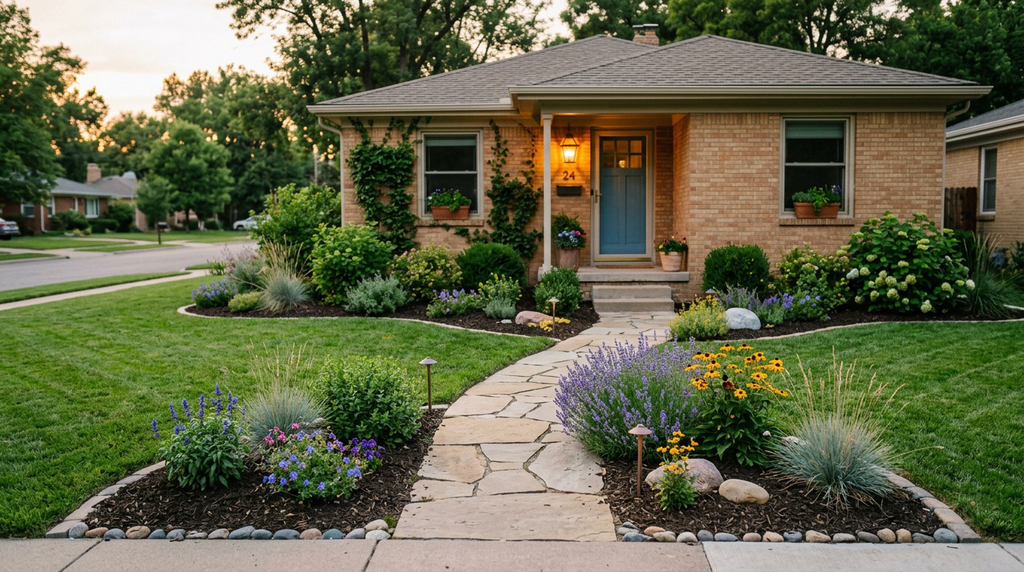
When people think of a front yard, they often picture a green lawn, and grass does give it a gentle, traditional appearance. If you decide to have a lawn, choose grass that is appropriate for your sunshine and climate. Warm-season grasses like Bermuda and zoysia are better suited for hot climates, whereas cool-season grasses like fescue and Kentucky bluegrass are better suited for colder climates. You have two options for starting a lawn: sod, which is more expensive but produces immediate results, or seed, which is less expensive. For cool-season varieties, seed works best in early autumn or spring; for warm-season varieties, it works best in late spring. Regardless of the technique you select, maintain constant moisture in the soil until the grass takes root.
There are other options besides a lawn. Nowadays, a lot of homeowners replace part or all of their grass with ground coverings that require less watering and mowing, like creeping thyme, clover, or sedum. Mulch beds, flowering borders, and gravel areas can all add variety while requiring less maintenance. The ideal combination of low maintenance and aesthetic appeal is frequently achieved by combining a large planting bed with a small lawn. Select what suits your time, climate, and preferences.
Choose Plants Carefully
A front yard’s colour, texture, and personality come from its plants. The best advice for novices is to select plants that are suitable for their environment. After determining the amount of sunlight each location receives, look for plant kinds that are suitable for those conditions by reading the tags. Sun-lovers who are planted in shade will suffer, and the opposite is equally true.
Create a layered planting plan. Let’s start with the backbone, which consists of larger plants and trees. Evergreen shrubs like boxwood, juniper or holly keep the yard looking good all year round, and a small tree near the house’s corner adds height and shade. Add medium-sized shrubs and annual perennials after that. Daylilies, coneflowers, lavender, hostas, and ornamental grasses are examples of hardy options. Lastly, use low-growing plants and seasonal flowers to fill in the spaces and edges.
Plant short plants at the front edge, medium plants in the center, and taller plants at the back or next to the house. Instead of dispersing individual plants, plant in clusters of three or five to make an impact and look more natural. Keep an eye out for mature size. A little shrub in a nursery pot has the potential to develop into a monster, so make sure each plant has adequate room to expand to its full size without obstructing walls, windows, or walkways.
Take into account native plants as well. They use less water and fertiliser, are suited to the local climate and soil, and draw birds, bees, and butterflies. For novices who desire success with minimal hassle, they are a great option.
Plant Correctly
A well-planted garden gets off to a great start. Before moving plants, give them some water in their containers. To ensure that the top of the root ball is level with the surrounding soil, dig a hole that is roughly twice as broad as the root ball and equally deep. Place the plant in the hole, gently release the circular roots, and then replace it with the same dirt. After gently pressing to eliminate any air pockets, thoroughly water.
Spring and early autumn are the ideal planting seasons because of their warm temperatures and more consistent rainfall. Steer clear of planting in the bitter cold of winter or the sweltering heat of midsummer. Since the roots of new plants are still being established, water them frequently during the first season. Many will require far less care after that.
Apply a two to three-inch layer of mulch, such as wood chips or shredded bark, to each bed. Mulch prevents weed growth, retains moisture, and gives beds a polished, tidy look. To avoid decay, keep it slightly away from trunks and stems.
Add Borders, Paths, and Structure
A front garden is shaped and polished by hard edges and surfaces. The most crucial element is a walkway that connects the front door to the driveway or pavement. Select a material that fits both your budget and your house. Stepping stones lend a laid-back charm, pavers and flagstones provide a clean, long-lasting appearance, and gravel is inexpensive and simple to install. Create a walkway that is three to four feet broad enough for two individuals to walk side by side.
Borders help the yard appear neat and keep the lawn and gardens apart. You can use bricks, stones, metal edging, or just use a spade to cut a tidy edge. A garden looks instantly professional with a sharp edge.
Think about incorporating some structural elements. A simple seat or planter next to the door can provide a welcoming space, a little retaining wall helps manage a slope, and a low fence or hedge can define the border. Make decisions that complement the design of your home, and before constructing anything towering or permanent, check local regulations.
Complete the Details and Lighting
In addition to keeping a front yard secure, lighting enhances its beauty after dark. Solar path lights require no wiring and are simple to install. Put them along garden margins, walks, and steps. A tree or the front of the house can be highlighted with a few little spotlights. Warm white light has a warm, inviting vibe.
Personality is created by minute nuances. Update your house numbers and mailbox, paint the front door a welcoming colour, and place a few large containers filled with seasonal flowers next to the door. The picture is finished with a neat porch and a clean doormat. Although they are inexpensive, these details create a powerful first impression.
Taking Care of Your New Front Yard
In its first year, a new garden need consistent care. Check for weeds once a week and water frequently, particularly during dry spells. Avoid cutting the lawn too short and mow it at the appropriate height, which is typically three to four inches for cool-season grass. Plants should only be pruned when necessary, and they should be sparingly fertilised using a slow-release fertiliser.
You will eventually discover which plants flourish and which require modifications. If something doesn’t work out, don’t give up. Even seasoned gardeners occasionally lose a plant. Change it out for something more appropriate for the situation and continue.
Errors Novices Should Avoid
Almost all initial projects have some mistakes. Ignoring a plan results in an imbalanced or congested garden. Poor growth results from neglecting soil preparation. Crowding results from selecting plants without considering sunlight and mature growth. Purchasing too much at once puts a burden on your finances and timetable. Common issues include overfertilising, overwatering, and short mowing.
Expecting perfection right now is the biggest error. Many plants appear little in the first season, and new yards need time to fill in. Be patient and keep in mind that the most significant changes frequently occur in the second and third years.
Concluding Remarks
Building a front garden is an imaginative, fulfilling endeavour that develops with you. Observe your area and collect ideas first, then make a basic layout and set up the area. Build pathways, borders, and lights to tie everything together, choose a lawn or alternative that works for you, and choose plants that fit your environment. Give your new garden consistent care and let it to grow at its own speed.
You will know the effort was worthwhile each time you pull into the driveway and witness a warm, vibrant entryway. This week, start the process of transforming an empty plot of land into a front garden you adore by measuring your space or drawing your layout.