Related Articles
With a little imagination and preparation, you could convert a modest patio into one of your favorite spaces. You don’t need a big budget or experience to make improvements to your exterior space, even if it looks dated, cluttered or ugly. With some simple modifications you could create a comfortable space to unwind, enjoy your morning coffee, read a book or just chill with the family.
The good news is, if you’re wondering how to fix up a small patio for beginners, you can start with simple upgrades and do most of the work yourself. Every little step matters, be it cleaning the floor, adding plants or putting in comfortable furniture.
This guide will show you how to fix, decorate and arrange a small patio without breaking the bank.
- First, clean your small patio.
Before you buy any furniture or décor, make sure you clean your patio thoroughly. Even a beautiful outdoor space can look uncared-for if it’s covered in dust, fallen leaves, filth, and unwanted objects.
Get rid of anything you don’t use any more, such as empty containers, broken furniture and old pots. Carefully sweep the floor, then wash the floor with water and a suitable cleaning agent. If your patio is heavily stained, choose a cleaner suitable for your type of flooring.
Look for dirt or standing water in the drainage areas, walls and corners. “Clear blocked drains so that rainwater can drain away properly.
One of the easiest things you can do to make a small patio look better is clean it. It’s inexpensive and instantly makes the space look more orderly.
- Fix the floor before decorating.
The floor of a patio plays a huge role in its attractiveness and safety. The area can be uncomfortable to use due to uneven surfaces, slippery areas, loose paving stones and cracked tiles.
First, scan the entire floor. Determine the cause of loose tiles or broken pavement before you begin repairs. If there are deep cracks or large displacements you will need expert help, but minor surface problems can often be solved with a simple do-it-yourself approach.
A basic concrete patio can be transformed with the right floor coating or outdoor concrete paint. “Make sure the product has good slip resistance and is appropriate for outdoor use. For cleaning, preparing and drying, in accordance with the manufacturer’s instructions.
However, if you are renting your home, short-term improvements such as removable deck tiles or outdoor carpets might be a good option, provided they are appropriate for the surface and not moisture-trapping.
Tips for beginners: First, take care of safety issues. A nice patio is no good if the floor is slick or unsteady.
- Choose Furniture That Fits Space
One of the most common mistakes in improving a small patio is to buy furniture that is too large. Big tables and chairs can quickly make a room feel crowded and hard to move around in.
Instead, measure your patio before you go out and purchase. Look for small, multi-use furniture.
Some reasonable options are:
Folding chairs are easy to store away when you need some extra space.
little bistro tables A small table is ideal for outdoor dining, coffee and snacks.
Storage benches: These give you somewhere to sit as well as somewhere to store gardening tools or cushions.
Stackable stools: they are moveable as required.
Opt for outdoor furniture, particularly if your patio is exposed to rain or bright sunshine. Some bright cushions bring out personality, but neutral colors can make the room feel airier.
You don’t have to fill every space. A bit of open space makes a modest patio more esthetically pleasing and comfortable.
- Go with Plants for a Different Look
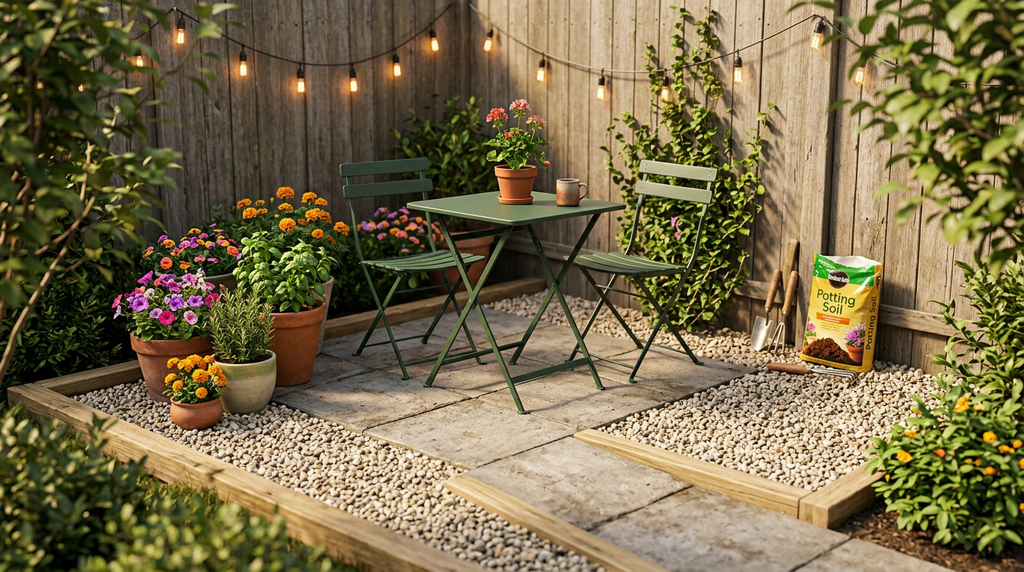
Plants are one of the easiest ways to make a patio feel busy and inviting. First of all, you don’t need a large garden or much experience gardening.
Choose plants according to the amount of sun your patio receives. Plants that like shade are best for patios that get less direct exposure, while sun-loving plants do best in sunny areas.
If you don’t have enough floor space, consider vertical plant stands, hanging planters or railing planters. These choices allow you to enjoy greenery without filling the walking area with pots.
If you have plenty of light on your patio, basil and mint are good. For more color, you can also experiment with flowering plants.
Select a good potting mix, and use pots with holes in the bottom. Check each plant’s individual watering needs and be careful not to overwater.
Begin with a few low-maintenance plants, instead of buying a lot of plants at once. As your confidence grows, you can increase the size of your collection.
- Increase Shade & Privacy
A small patio open to nearby windows or exposed to too much sun can be uncomfortable. Add shade and privacy to make the space more useful all day long.
Patio umbrellas are an easy way to shade a small seating area. If there is enough space, a retractable awning or appropriate outdoor cover may also be of help.
Think about using light trellises, tall potted plants or outdoor screens for privacy. Before you put anything up, make sure it will work on your patio and is allowed by any rental or property rules you may have.
Screens and umbrellas should be firmly secured, particularly in windy weather. Don’t put heavy furniture or pots where they might fall or block an exit.
Choose only those that will satisfy your actual needs. If you already have a lot of shade on your patio, you might want to focus on plants, lighting or chairs.
- Light Up The Patio To Make It Warm
A small patio can be a peaceful retreat in the evening with the right lighting. Creating a nice ambiance does not require spending a lot of money on electrical installation.
Solar-powered garden lights are a practical option if there is enough daylight to charge them. Small lanterns can add a soft accent lighting, and outdoor-rated string lights can create a warm ambiance around a sitting area.
Position lighting so that it improves visibility, but does not cause glare. If you choose electric lights, use electrical lights that are rated for outdoor use and follow installation guidance.
Don’t leave unsecured electrical cables across walkways as they can be a trip hazard.
In general, it’s better to have a few well-placed lights than to fill every nook and cranny.
- Add Inexpensive Decorations
You don’t have to spend a lot of money on decorations to give your patio a unique touch. Simple decorations can make the most impact when they are integrated into the rest of the room.
You could think about adding a few decorative plant pots, weatherproof couches, a small side table or an outdoor rug. Instead of mixing too many different patterns, pick colors that go together.
Use an outdoor rug to help define the seating area and make the patio feel like an extension of the living room. Make sure it’s designed for outdoor use and can dry well enough if it rains.
Another is to reuse items you already own that are suitable. For instance, there is a sturdy old stool that can be cleaned up and finished with the right external treatment and used as a stand for plants.
And set the patio in a simple manner so that cleaning and walking are easier.
- Make a simple budget and take it step by step
You don’t have to do all the improvements in one weekend. In fact, phasing your work can save you some money.
Identify the issues that should be tackled first. Prioritize cleaning, drainage, damaged flooring and other safety issues before spending money on decorations.
Then figure out how much you can afford. Check the prices. Before you buy anything take measurements and look for things that are good for the outdoors and that will last.
Here is an example of a simple improvement plan:
Weekend 1: Wash the patio and remove any debris.
Weekend two: Do some minor repairs and refinish the floors if needed.
Weekend three: Add a few plants and small furnishings.
Fourth weekend Complete decorations, cushions and lighting.
Adapt this schedule to fit your budget and time. You can take a few months to complete the project or do it faster.
Summary
You don’t need fancy furniture, a lot of landscaping know-how, or a lot of expert experience to fix up a small patio. With some thought, a neglected outside space can be turned into a cozy and attractive feature of your house.
First, clean the area, fix any safety concerns and choose furniture that fits well. To make it inviting, then add some affordable decorations, some greenery, plenty of shade, and simple lighting.
Remember that the key to a great patio makeover isn’t adding as many objects as you can. The idea is to make the best use of the space you have. Take your time, stick to your spending plan, and focus on upgrades that fit your lifestyle.
A small patio can also be a favorite spot to unwind. Keep it neat, cozy and well-planned.