Related Articles
Growing fresh lettuce does not require a large garden or a balcony filled with sunshine. In fact, lettuce is one of the most forgiving vegetables for small outdoor spaces that receive limited direct light. With the right variety, a suitable container, and a little attention to moisture, you can harvest tender leaves just steps from your kitchen.
If your apartment faces north, sits between taller buildings, or receives only a brief patch of morning sun, there is still reason to try. This guide explains how to grow lettuce on a shaded apartment balcony, from checking available light to picking your first salad. The goal is a practical setup that suits real apartments and everyday schedules.
Can Lettuce Really Grow in Shade?
Yes, although shade affects how quickly lettuce grows and how much you can harvest. Lettuce generally performs best with several hours of gentle sunlight. However, it tolerates partial shade better than many fruiting crops, including tomatoes and peppers. Cool temperatures also help leaves stay tender and reduce the risk of premature flowering.
A balcony that receives three or four hours of direct morning sun can be an excellent growing spot. A location with bright indirect light throughout much of the day may also support leafy lettuce, but growth will usually be slower. In very dark corners, plants can become thin, pale, and stretched. No variety can thrive without enough usable light.
Check the Light on Your Balcony First
Before buying seeds or pots, watch how light moves across your space. Check the balcony during the morning, around midday, and again in the afternoon. Notice whether sunlight reaches the floor, railings, or a nearby wall. Buildings above and opposite your apartment may block light differently as seasons change.
Understand Partial Shade and Bright Indirect Light
If you are unsure whether the spot is bright enough, start with one small container. Healthy new leaves and compact growth suggest the conditions are workable. Long stems, weak plants, and little growth after several weeks suggest you need a brighter position.
Make the Most of Existing Light
Place containers near the balcony edge when it is safe and permitted by your building. A light coloured wall can reflect some daylight onto the plants. Keep dusty glass panels clean, and avoid placing tall decorative plants where they block lettuce. Never hang heavy containers from railings unless the fittings and building rules allow it.
Choose Lettuce Varieties That Suit Limited Sun
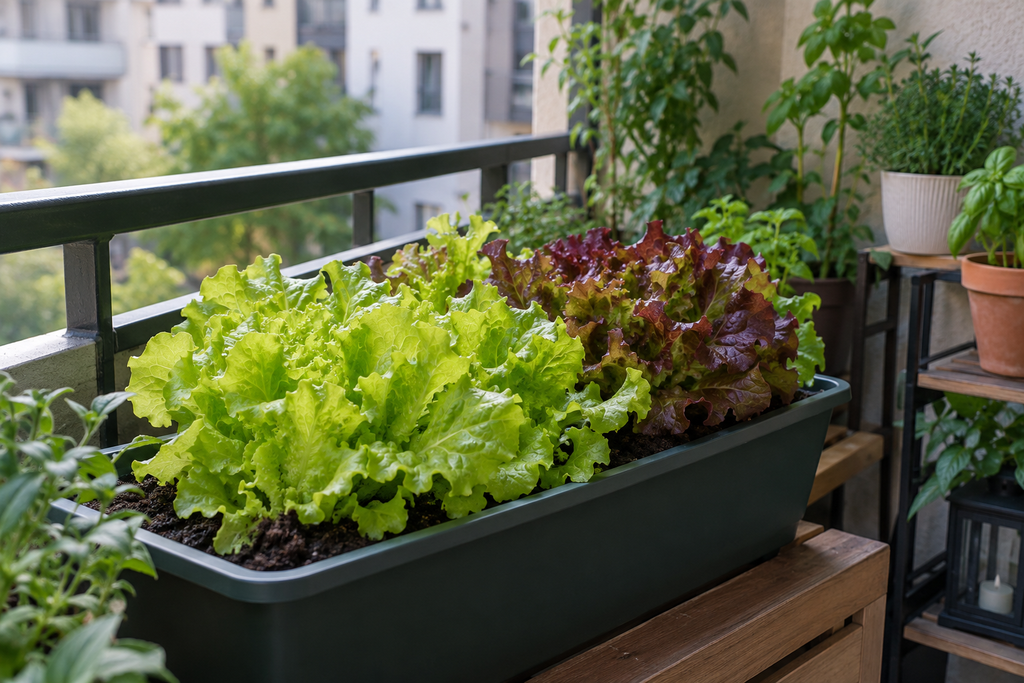
The type of lettuce you grow makes a difference. Loose leaf varieties are particularly convenient because you can remove outer leaves without waiting for a full head to form. They also make it easy to harvest small amounts for sandwiches and salads.
Loose Leaf Lettuce
Green Oakleaf, Red Salad Bowl, and similar loose leaf varieties are good starting points. They often mature sooner than large heading types and offer flexible harvesting. Red varieties may develop less intense colour in shade, which does not automatically mean the leaves are unhealthy.
Butterhead Lettuce
Butterhead types, including Bibb and Buttercrunch, produce soft, delicate leaves. They can work in partial shade, especially during cool weather. Allow enough space around each plant so air can circulate and the central leaves have room to develop.
Romaine and Crisphead Lettuce
Romaine can grow in containers, but it generally benefits from brighter conditions to form sturdy upright leaves. Crisphead types, such as iceberg, are usually less suitable for a heavily shaded balcony because forming a firm head takes time and sufficient light. If your space is dim, prioritize loose leaf varieties instead.
Select Containers That Fit a Small Balcony
You do not need raised beds or complicated equipment. A window box, rectangular planter, or a few individual pots can provide plenty of room for a modest household harvest. Choose containers that are easy to move if the brightest balcony spot changes during the season.
Container Depth and Spacing
A container around six to eight inches deep is adequate for many leaf lettuce plants. Deeper pots can hold moisture more consistently, which is helpful on windy balconies. For full plants, follow seed packet spacing recommendations, often around six to ten inches depending on variety. Baby leaf lettuce can be sown more closely because you harvest it young.
Every container needs drainage holes. Without them, water collects around the roots and encourages rot. Put a saucer underneath if necessary, but empty standing water promptly to avoid soggy soil and damage to your flooring.
Pick a Practical Potting Mix
Fill containers with a quality potting mix intended for vegetables or general container gardening. It should feel light, hold some moisture, and drain excess water easily. Garden soil taken from outdoors is usually too dense for small pots and may contain weed seeds or pests.
How to Plant Lettuce Seeds Step by Step
Lettuce seeds are inexpensive, easy to store, and well suited to repeated planting. You can also purchase young plants from a garden centre if you prefer a faster start. Seeds offer more variety and let you control how densely your containers are planted.
Prepare and Sow the Seeds
Moisten the potting mix before sowing. Scatter seeds thinly over the surface or make shallow rows. Cover them lightly with mix according to the packet directions, usually no more than about one quarter inch. Lettuce seeds are small and may struggle if buried too deeply.
Mist the surface gently or water with a fine rose attachment. Label each container with the variety and sowing date. Keep the surface consistently moist while the seeds germinate, but do not soak it.
Thin Young Seedlings
Once seedlings have several true leaves, remove crowded extras. Crowding limits airflow and makes the remaining plants compete for water, nutrients, and light. Snip unwanted seedlings at soil level rather than pulling them out and disturbing nearby roots.
Use the final spacing suggested on the packet for mature lettuce. If your goal is baby leaves, you can keep more seedlings and harvest the crop while it is still small.
Water Lettuce Carefully in Shaded Conditions
Shade slows evaporation, so lettuce on a sheltered balcony may need less frequent watering than lettuce in full sun. However, wind, pot size, and temperature still affect how quickly containers dry. Avoid watering automatically on a fixed daily schedule.
Push a finger about an inch into the potting mix. If it feels dry at that depth, water slowly until a little excess drains from the bottom. If the soil remains damp, check again later. Consistently moist soil encourages steady leaf development, while repeated drying can produce bitter leaves and stressed plants.
Water near the soil rather than regularly soaking the foliage. Morning watering gives accidental splashes time to dry. This is particularly important on enclosed balconies where air movement is limited and damp leaves can encourage disease.
Feed Plants Without Overdoing Fertilizer
Lettuce grows leaves rather than fruits, so it benefits from an adequate but moderate supply of nutrients. Many commercial potting mixes contain starter fertilizer, making extra feeding unnecessary during the earliest growth stages. Read the packaging before adding anything.
If growth slows after the seedlings become established and light is adequate, apply a balanced liquid fertilizer at the label rate for edible container plants. Do not assume more fertilizer produces better leaves. Excess feeding can damage roots, while insufficient daylight cannot be corrected with nutrients alone.
Manage Temperature, Wind, and Seasonal Changes
Lettuce is a cool season crop. Mild spring and autumn weather usually provides excellent growing conditions in much of the UK, Canada, and northern USA. In warmer US regions, autumn through spring may be more suitable than midsummer. Local climate always matters more than a fixed calendar date.
Prevent Bolting in Warm Weather
When days become hot or excessively long, lettuce may bolt, meaning it sends up a flower stalk and the leaves often turn bitter. Shade can help reduce heat stress, but it cannot completely prevent bolting. Harvest promptly when plants begin stretching upward or the leaves change flavour.
On unusually hot afternoons, move portable pots away from heat radiating off brick walls or concrete. Keep soil evenly moist and select varieties described as slow to bolt when planting for warmer months.
Protect Your Balcony Crop From Wind
Balconies can be windy even when they receive little direct sunlight. Gusts dry potting mix, damage delicate leaves, and may topple lightweight containers. Use stable planters positioned on a secure surface. A breathable screen can reduce exposure, provided it does not block too much of the light your lettuce needs.
Harvest Leaves for a Longer Supply
Your first harvest depends on variety, temperature, available light, and the size of leaves you want. Baby leaves may be ready within several weeks under favourable conditions. Larger plants take longer, particularly when grown in shade.
Use the Outer Leaf Harvesting Method
For loose leaf lettuce, pick the largest healthy outer leaves first and leave the central growing point intact. Take only a portion of each plant at once so the remaining foliage can keep producing. Use clean scissors or gently pinch leaves without pulling up the roots.
Sow New Seeds Regularly
Instead of planting every seed on the same day, sow a small batch every two or three weeks during suitable weather. This approach, called succession planting, spreads your harvest over a longer period. On a balcony with limited space, rotating two or three containers often works better than growing one large crop at once.
Common Problems and Simple Fixes
Yellow leaves may indicate overwatering, nutrient problems, aging foliage, or insufficient light. Check soil moisture and drainage first, then review how much daylight the plants receive. Pale seedlings that lean toward the balcony edge often need a brighter position.
Small holes in leaves can be caused by slugs, snails, or insects. Inspect the undersides of leaves and nearby pots before choosing a treatment. Remove visible pests by hand when practical. For any garden product, follow local instructions and confirm it is approved for edible crops.
Mould or persistent dampness suggests poor airflow or excessive watering. Space the plants apart, remove damaged foliage, and avoid wetting leaves late in the day. If plants repeatedly fail in a very dark location, consider supplementing daylight with a suitable grow light where electrical safety and building rules permit.
Frequently Asked Questions
Can Lettuce Grow on a North Facing Balcony?
Yes, if the balcony receives enough bright daylight. North facing locations in the northern hemisphere often lack direct sunshine, especially in winter. Loose leaf lettuce is worth trying, but expect slower growth and smaller harvests than in a brighter location.
How Many Hours of Sun Does Balcony Lettuce Need?
Several hours of gentle direct sun is helpful, with three or four hours providing a practical starting target. Bright indirect light can sometimes work, although the results vary. Deep shade with very little ambient daylight is unlikely to produce a worthwhile harvest.
Can I Grow Lettuce Indoors Near My Balcony Door?
You can, provided the spot receives strong natural light or suitable supplemental lighting. A dim room several feet away from the glass is usually less effective than a bright outdoor balcony. Ensure pots drain safely and avoid exposing plants to strong heating vents.
What Is the Easiest Lettuce for Beginners?
Loose leaf lettuce is generally the easiest choice because it grows quickly under suitable conditions and can be harvested gradually. Start with one reliable seed variety, learn how your balcony dries between waterings, and expand once you see consistent growth.
Conclusion
Learning how to grow lettuce on a shaded apartment balcony starts with realistic expectations. Choose leafy varieties, use containers with drainage, protect the plants from harsh weather, and pay close attention to available daylight. With patient watering and regular small sowings, even a modest balcony can become a convenient source of fresh salad greens.