Related Articles



Setting up garage storage is exciting. You buy the shelves, put up the hooks, label the containers and the room looks great for a few weeks. And then something happens. Tools stray from their homes, a new box is tossed in the corner, and a new layer of mess is slowly added to the floor. Many novices get frustrated and think their method has failed when this happens. The system is rarely the problem in fact. What’s lacking is maintenance. Even the best storage arrangement requires a little attention, routine maintenance, and basic routines to be functional.
This article is written in simple, friendly language and covers the best ways to save garage storage. We’ll cover daily and weekly routines, monthly and seasonal check-ins, shelf and rack inspections, container care, pest and moisture protection, tool care, handling incoming clutter, and getting the entire household involved. You don’t need special knowledge or a lot of money. You just have to have a consistent schedule and be able to adjust on the fly a little bit.”
Know the significance of maintenance
It takes time to get a garage organised well. It is a dynamic system that will adapt itself to the needs, interests and possessions of your family. Otherwise, even the most perfect system will degenerate into chaos sooner or later. Shelves collect dust and things are forgotten, containers get too full and things are returned to the wrong spot.
Plus maintenance safeguards your investment. Expensive tools and equipment are stored on shelves, racks, hooks and bins. Both are vulnerable to damage from moisture, pests, overcrowded shelving and careless handling. A little bit of routine maintenance for a few minutes can save you a lot more money than time in the way of rust, mould, broken brackets and misplaced items.
Safety is another compelling argument. Garages contain sharp tools, heavy objects, chemicals, and sometimes cars. A clean, orderly environment minimises the risk of tripping, falling objects, fire hazards, and inadvertent contact with hazardous materials. “When everything has a home, and remains in its home, everyone feels safer in the garage.
Create Small Daily Routines
Great maintenance is built on a few small time-saving routines. The key is to put things back where they belong immediately after you are done with them. If you have taken a drill out of the garage, put it back before you leave. When you come in with groceries, take out the recycling bag right away. The simple rule is that temporary piles become permanent clutter, so don’t put something down for a little bit.
Keep a small trash can or bag near the door and use it frequently. Soon the garage is full of packaging, broken things and old papers. They’re discarded as soon as they arise, so there’s no buildup. Similarly, keep a hand brush or small broom handy so you can quickly sweep away leaves, sawdust and grime.
Develop the habit of taking a quick look around every time you enter the garage. This quick scan helps to detect problems such as a tipped bin, a leaking bottle or a product left in the wrong location early on. If these problems are caught early enough, they can be repaired in a matter of seconds; however, if they are not, they may result in more significant problems down the road.
Watch a Weekly Reset
Schedule a day each week to do a quick garage reset, preferably 10 to 15 minutes. It’s not a deep clean, but a quick clean up. Take a small basket or bag and go around the area picking up anything that has fallen into the wrong spot. Hang the garden stuff back on its hooks, put the sports stuff away on its shelf, and put the tools back on the workbench.
Empty the garbage and recycling, sweep the floor and clean the work station. Be certain that all walkways are clear, especially the one from the door of the home to the door of the automobile. Having a clear path makes it much easier to get in and out and prevents trips.
A quick glance at the area where the products first enter. This is usually near the house door and is where shoes, bags and other random stuff tend to accumulate. By cleaning it once a week you prevent the problem from getting worse in the garage. One of the easiest ways to keep the area uncluttered without spending entire weekends cleaning is to do a weekly reset.
Do a Monthly Check-In
Have a closer look in your storage once a month. Let’s begin with the shelves. Ensure they are level, stable and not overworked. If you notice any sagging, bowing or wobbling, re-balance the weight and take some objects off. Make sure you obey weight limits on shelving, and put heavy items on lower shelves.
Next, consider the wall systems. Give hooks, pegboard accessories and slat wall attachments a good pull to be sure they are secure. Tighten any bolts or screws that have become loose. The hardware may slowly loosen over time from vibrations caused by the garage door, nearby traffic or heavy use, so check it often.
Look at your containers. Do any of the lids have a crack or do not close properly? Are the labels faded or peeling? Repair broken containers and renew labels so you can always find what you are looking for. Also look for items that have found their way into the wrong bin (this is a common mistake when people are in a hurry).
And finally, check your zones. If one spot has gotten too crowded, decide if something needs to be moved, removed or given more room. If a zone is always overflowing, that’s not a failure on your part — it’s a sign your system needs a little tweaking.
Look at the hardware. Look at the racks and shelves.
Regular hardware inspection is important, because garage storage often involves large loads. Check the ceiling racks every few months. Verify that the rack is level, the bolts are still secure and there are no signs of movement or cracks where the rack attaches to the ceiling. “Never exceed the weight rating and never store really heavy goods overhead.
Inspect metal shelving for rust especially in damp areas. For small rust spots, you can sand them lightly and paint them with rust-resistant paint. Make sure you inspect the wooden shelves for any water damage, warping, or soft spots. Watch out for cracks, as plastic shelves can become fragile with age.
Check ropes, hooks and mechanisms for wear when using hoists, pulleys or bike racks. Bent hooks and frayed ropes should be replaced as soon as possible. Someone can be hurt or a car can be damaged by a broken ladder rack or bike hoist. Don’t think of these inspections as a hassle, but a brief safety procedure.
Systems installed on walls are required to be anchored. If the track or rail begins to slide away from the wall, remove the weight and secure it into solid studs with the right screws. Never ignore a loose mount, because the weight it supports might suddenly come down.
Keep Containers and Labels
Containers are the go-to for garage storage and occasionally require upkeep. Wipe the lids and bins down every few months to remove spider webs, dust and debris. Briefly open each one and look for damp, pests or damage to contents. Long-term storage can cause problems you don’t know about.
Do not fill containers past the top. If the bin is overfull it will not close properly, allowing dust and insects to enter, and will be dangerous to stack. Split a bin packed full in two. Place the heavy bins on the lower shelves and pile lighter goods higher.
Regular maintenance is required for labels. Print is faded, tape is peeling, and descriptions are vague, so it is difficult to locate goods. If the labels are difficult to read, retype or reprint them. Avoid using umbrella terms such as miscellaneous. Be specific such as winter camping equipment or auto cleaning materials. Ensure that any inventory list that you have is updated anytime you add or remove any major item.
Consider changing the bins according to the seasons. It’s spring, so put the snow gear away and get out the gardening equipment. Reverse that in the autumn. Keeping current season items front and center, within easy reach, saves you time, and you won’t have to dig around for irrelevant gear.
Protect Things from Temperature and Humidity
Garages are subject to temperature changes and humidity so continual protection is important. Make sure nothing touches the exposed concrete floor. Moisture can be pulled up through concrete, damaging metal, cardboard, wood, and fabrics. Pallets, risers and shelves lift objects to a higher, safer level.
Watch for signs of moisture such as rust on tools, water stains, condensation on windows, and musty smells. If you notice these symptoms, search for the source. It could be a leaky roof, a crack under the door, poor drainage outside, or just too much humidity. Don’t just treat symptoms, treat the issue. A small dehumidifier or moisture absorbing sachets can be useful for damp climates and should be emptied or replaced regularly.
It helps to air it out. If not raining, open garage door to air out. Don’t pack the shelves so tight that air can’t get through the stuff. If you have any, keep your windows and vents clear.
Take care when handling objects that are sensitive to heat or cold. Extreme temperatures can harm paint, adhesives, batteries, propane tanks and electronic gadgets. If the garage gets too hot or too cold, move delicate goods inside and refer to the storage instructions on each product label.
Keep Pests From Moving In
Garages are attractive to mice, flies, and other pests that seek warmth, cover, and myriad hiding places. The best defence is maintenance. Keep the area clean and free of spills, crumbs and uncovered food. Because rodents can gnaw through bags, keep pet food, birdseed and grass seed in sealed metal or hard plastic containers.
Look around windows, doors, pipes and garage door bases for any gaps. Repair worn door seals and caulk or weatherstrip any small holes. Bugs like to build their nests in small, dark areas so don’t stack boxes tight against walls. Allow some space around items so you can see and clean behind them.
Look for evidence of chewing or nesting on stored papers, cardboard and fabrics. If you see shredded material, droppings or a strange smell – act fast. If the problem doesn’t go away, clean the area, get rid of any affected objects and think about using traps or calling in the professionals. Regular inspections catch problems early, long before they become infestations.
Keep your tools working
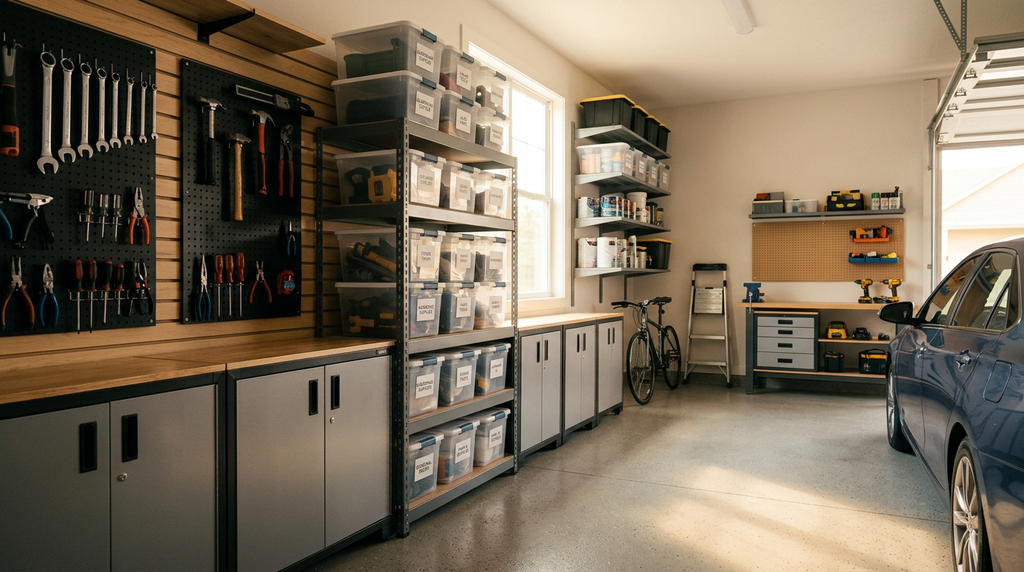
Basic maintenance can make tools last longer and they are often the most valuable items in a garage. Clean dirt, moisture and debris off after each use. A quick wipe with a dry cloth will keep rust away and a light coat of oil will protect metal tools over time. • Keep tools dry and away from wet floors and walls.
Sharpen blades of cutting tools, shovels and garden equipment once or twice a year. Check wooden handles for splinters and cracks and replace any that are damaged. Keep the cords on your power tools untangled and inspect them for frays. Store batteries in a temperate temperature and charge them according to the manufacturer’s recommendations.
Check each tool once or twice a year to make sure it is still working and that you still need it. Donate or sell duplicates. Dispose of damaged items properly. A smaller, healthier collection is simpler to use, and easier to maintain.
Control New Items and Stop Creeping
Incoming clutter is the biggest threat to a garage system. Every new purchase, gift, and hand-me-down is a competition for space. This can be done with a few basic guidelines. Have a one in one out policy so that when something new comes in something old goes out. Consequently, the total sum is constant.
Think about where it will go before you bring it into the garage. If there’s no place for it, consider if you really need it. Don’t keep anything in the garage you can’t decide on. Set a date for things that are still in debate, like the monthly donation box.
Watch out for big-ticket purchases. Bulk buying can be cheaper but it takes space. Have a spot set aside for anything before buying it. Use the older inventory first, keep the newer behind.
Organise an annual donation day when the whole family goes on a hunt for things to donate. The more regularly you get the chance to let things go, the less guilty you’ll feel and the less your shelves will fill up.
Treat Hazardous Materials and Chemicals Properly
Garages may contain paint, solvents, fertilisers, insecticides, motor oil and other items that should be handled with care. Check these every few months. Check for leaks, rust on cans, puffed containers or labels worn off. Dispose of expired or broken products according to local hazardous waste disposal regulations; never in the trash or down the drain.
Chemicals should be stored on sturdy shelves, preferably in a lockable cabinet, out of reach of children and dogs. “Keep children away from anything that can catch fire, such as water heaters and heat sources. Do not store flammable liquids in living areas and never keep petrol in unapproved containers. Check that containers are upright and that lids are tight.
Keep a fire extinguisher and a small first-aid kit in the garage and check the extinguisher’s gauge once a month. Replace or recharge if necessary. These easy safety precautions give you a priceless peace of mind.
Hold the Floor and the Lights
It’s a good idea to do regular maintenance as the garage floor takes a lot of wear and tear. Once or twice a year, wash it down with a stiff brush and a light cleaner, and sweep it once a week. Oil and chemical spills can cause slick areas and stains and should be immediately cleaned up with absorbent material. If your floor is finished or sealed, fix any chips as soon as you can, and follow the manufacturer’s care instructions.
Check the illumination every couple of months. Check motion sensors to ensure they are still functioning, dust fixtures and replace burnt out lights. Good lighting makes you want to keep the area clean and makes it easier to use. A dark garage invites mess and hides clutter.
Get the Whole Family Involved
Maintenance is best done as a team, since a garage is rarely used by one person. Make the labels obvious, show everyone where things go, explain the system. Children can learn how to store bikes and sports equipment if the storage is accessible.
Make a simple rule that everyone has to follow, take it, give it back. Every couple of months, do a quick family reset and have everyone spend 10 minutes cleaning up their own stuff. Reward positive behaviour and maintain a cordial, not harsh, tone. If people find a system simple and fair they are much more likely to follow it
Typical Mistakes Newbies Should Avoid
I keep getting a number of errors. If you don’t pay attention to little things like a damp corner or a loose hook, they can become bigger problems. Shelves overcharged will collapse and break. Boxes on the floor make cleaning a pain and attract bugs. Confusion and misplaced objects are caused by labels that are not updated. Seasonal audits are ignored, and obsolete equipment is occupying valuable space.
Another mistake is to expect perfection. A garage is a workspace and isn’t always going to look like it came out of a magazine. Don’t try to create a perfect system, create a system that works and is easy to reset.
Conclusion
The best garage storage maintenance strategies are based on simple, consistent behaviours. Re-put things away where they go, do a quick weekly reset, and a closer inspection monthly. Keep containers and labels in good condition. Check shelves, racks and hardware for safety. Protect possessions from moisture and vermin. Take care of your equipment, control the incoming clutter, store chemicals correctly and make sure all users are included.
Following these practices will help keep your garage organised without a lot of work. It’s not about a perfect showroom, it’s about a place that serves your needs on a daily basis.” Starting this week with a small habit — a 10-minute weekly reset or a quick inspection of your shelves — will make it that much easier to keep your garage organised, secure, and ready for whatever comes next.